

The IEEE WIFS Technical Program Committee is proud to announce the first keynote / invited speakers
December 8(Tuesday):
Prof. Kazutoshi Sasahara
School of Environment and Society, Institute of Science Tokyo
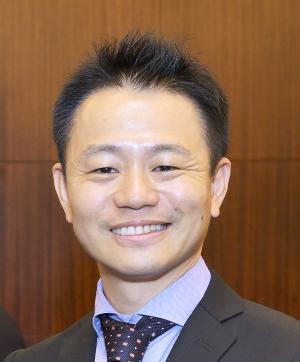
Title: The Science of Misinformation in the Age of AI: From Detection to Human Behavior
Summary:
The flood of misinformation on social media has emerged as a critical threat to society, and generative AI has exacerbated this problem. In this talk, we examine the mechanisms of misinformation diffusion through studies in computational social science, ranging from social data analyses to simulations of echo chambers and behavioral experiments on custom social media platforms. We then ask how forensic technologies—deepfake detection and warning labels—actually change what people believe and share, and show that their effects depend on timing and context. Finally, we address key challenges and future prospects for developing a resilient information ecosystem in which technical and behavioral countermeasures reinforce each other.
Short Bio:
Kazutoshi Sasahara received his Ph.D. from Graduate School of Arts and Sciences, The University of Tokyo in 2005. He held positions as Assistant Professor and Lecturer at Graduate School of Informatics, Nagoya University, and Associate Professor and Professor at School of Environment and Society, Tokyo Institute of Technology. He is currently a Professor at School of Environment and Society, Institute of Science Tokyo. He was a Visiting Researcher at UCLA in 2009 and at Indiana University in 2016. He also served as a JST PRESTO Researcher from 2016 to 2020. His expertise is in computational social science, with a focus on the science of fake news. He received the Excellence Award in the Social Sciences Category of the DOCOMO Mobile Science Award in 2024.
December 10(Thursday):
Antiza Dantcheva,
Research Director, INRIA Sophia Antipolis
Title:
Summary:
Short Bio:
December 11(Friday):
Prof. Ee-Chien Chang
National University of Singapore
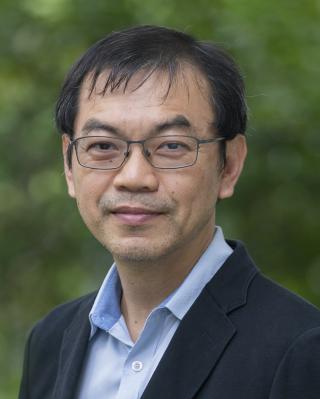
Title: Toward Provable Security for AI-Generated Content Watermarking
Summary:
A longstanding challenge in digital watermarking is to provide strong security guarantees against knowledgeable adversaries operating within a well-defined threat model. Existing analyses are often limited to empirical evaluations under random noise perturbations, rather than adversarial perturbation designed with knowledge of the watermarking algorithm and access to selected blackboxes. In this talk, we investigate provable security for watermarking schemes in diffusion-based AI-generated content (AIGC). We formalize adversarial capabilities through an oracle-based threat framework and characterize watermark removal attacks via reductions to white-noise perturbation. In particular, we show that a simple secret transformation can effectively reduce arbitrary adaptive attacks to “dumb” white-noise attacks. We further study proof-of-ownership guarantees and identify assumptions on the generation process under which rigorous security results can be established. Our discussion aims to bridge practical watermarking techniques with cryptographic-style security analysis, providing a foundation for more reliable attribution and ownership verification in generative AI systems.
Short Bio:
Ee-Chien Chang is an Associate Professor in the School of Computing at the National University of Singapore (NUS). He received his PhD in Computer Science from New York University and subsequently held postdoctoral positions at DIMACS, Rutgers University, and NEC Labs America. His research focuses on cybersecurity, with particular interests in cross-domain problems. His earlier work addressed multimedia security, including image forensics, image watermarking, and biometric cryptography, at the intersection of multimedia processing and applied cryptography. His current research investigates the use of machine learning in security-critical applications, as well as the security, robustness, and trustworthiness of machine-learning systems in adversarial settings. He has published in leading conferences and journals. He holds several patents, some of which have been acquired by third parties, and has engaged in technical consultancy with industry and public-sector organizations. He is currently a Lead Principal Investigator at the National Cybersecurity R&D Laboratory (NCL), NUS.